
BRICK THEATER STAGE
Dream Theater’s 40th Anniversary Tour marked more than four decades of progressive metal. It was also the band’s first tour following the return of drummer and founding member Mike Portnoy.
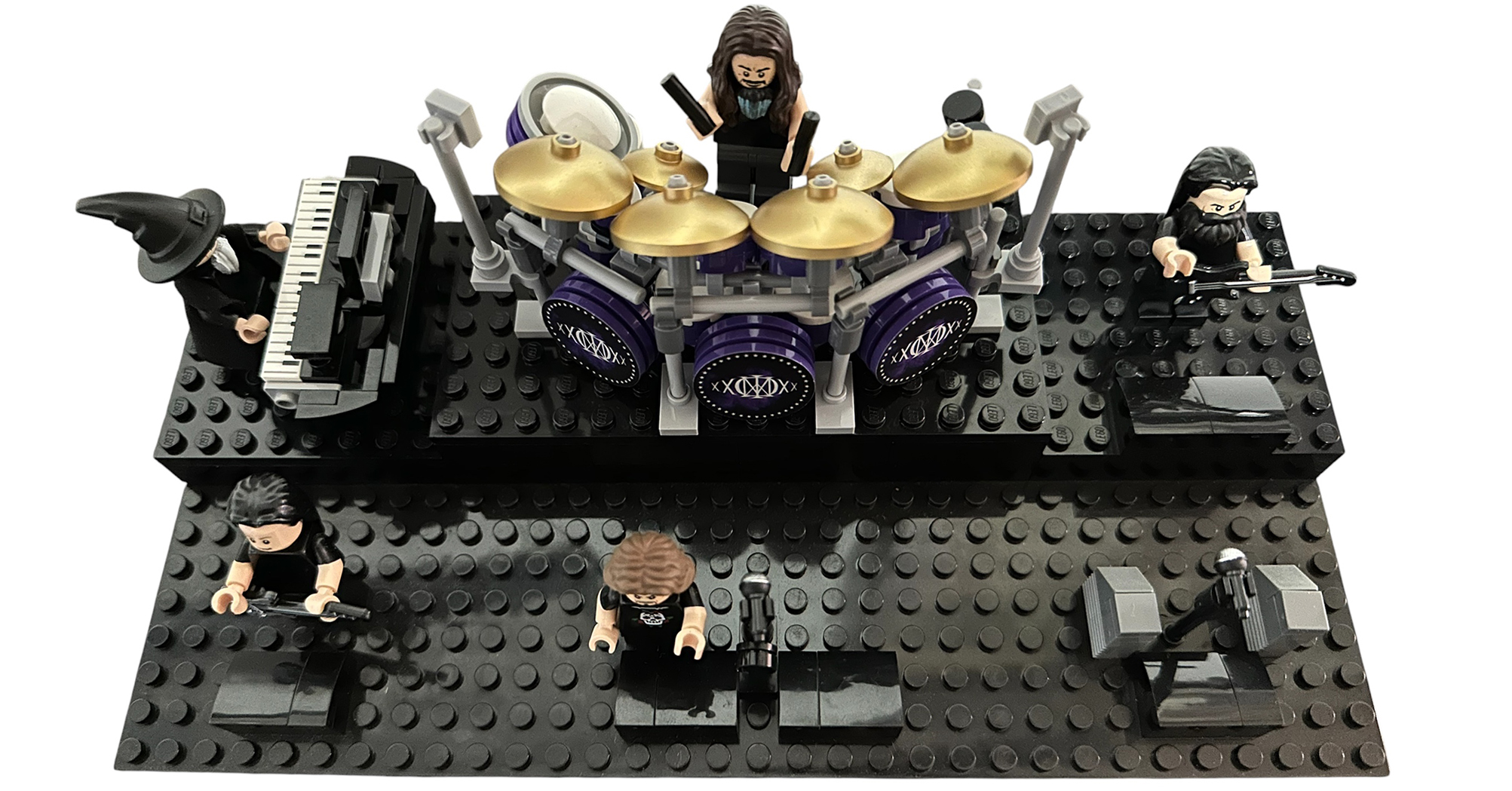
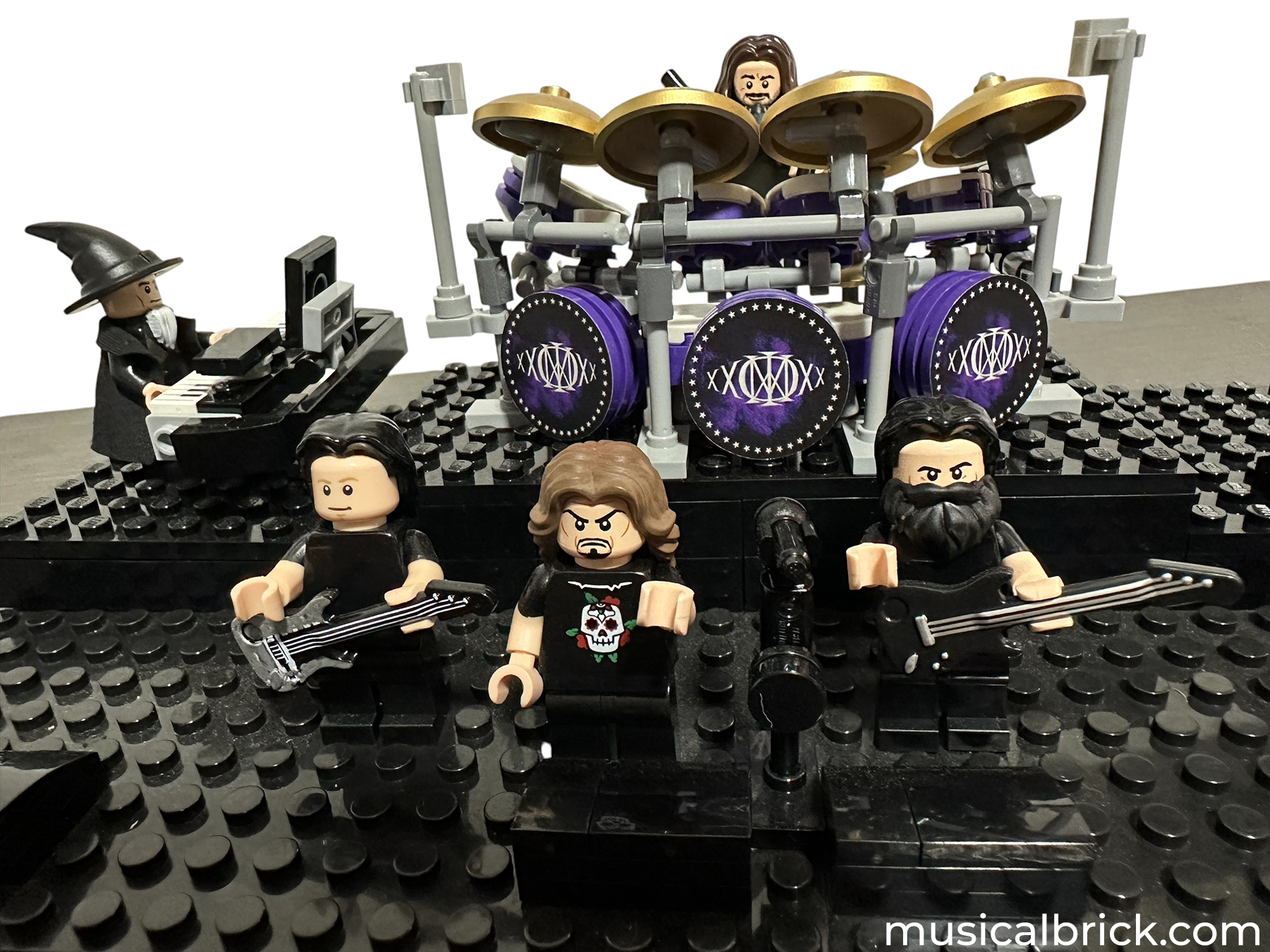
To capture that particular moment, I recreated the five members of Dream Theater and their stage equipment in LEGO.
The model features James LaBrie at the microphone, John Petrucci on guitar, John Myung on bass, Jordan Rudess with a rotating keyboard and Mike Portnoy elevated behind an enormous purple drum kit.
The Dream Monster
Portnoy’s drum kit had to be the centrepiece.
Built by TAMA especially for the anniversary tour, the new kit was named the Dream Monster. In a Drumeo documentary about its construction, Portnoy and his drum technician reveal just how complicated the instrument really is.
It is a 20-piece TAMA Starclassic Maple kit with a custom finish that fades from white into purple sparkle. It includes three bass drums, multiple rack and floor toms, concert toms, Octobans, two signature snare drums, a gong drum and an extensive collection of Sabian cymbals, all supported by a TAMA Power Tower rack.
But the most interesting detail is that it is not simply one enormous drum kit.


Portnoy describes it as two kits in one. One side is arranged as a traditional double-bass setup for heavier Dream Theater material. The other uses a single bass drum and gives him a different working environment for ballads and more experimental pieces.
This means Portnoy does not attempt to reach every drum from a single position. He physically changes position depending on the music. The kit’s size is not decorative. Its architecture gives him two different ways to perform.
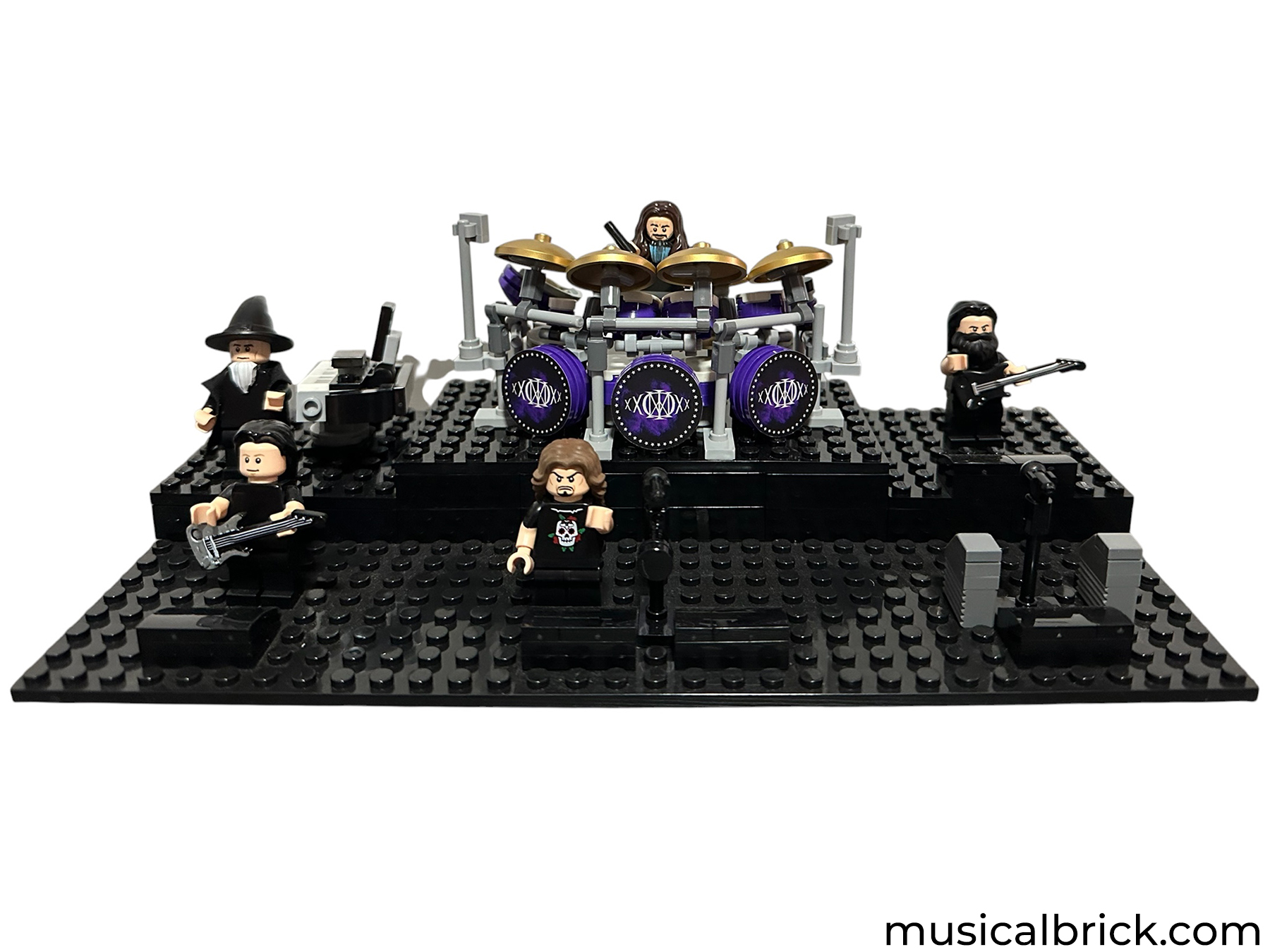
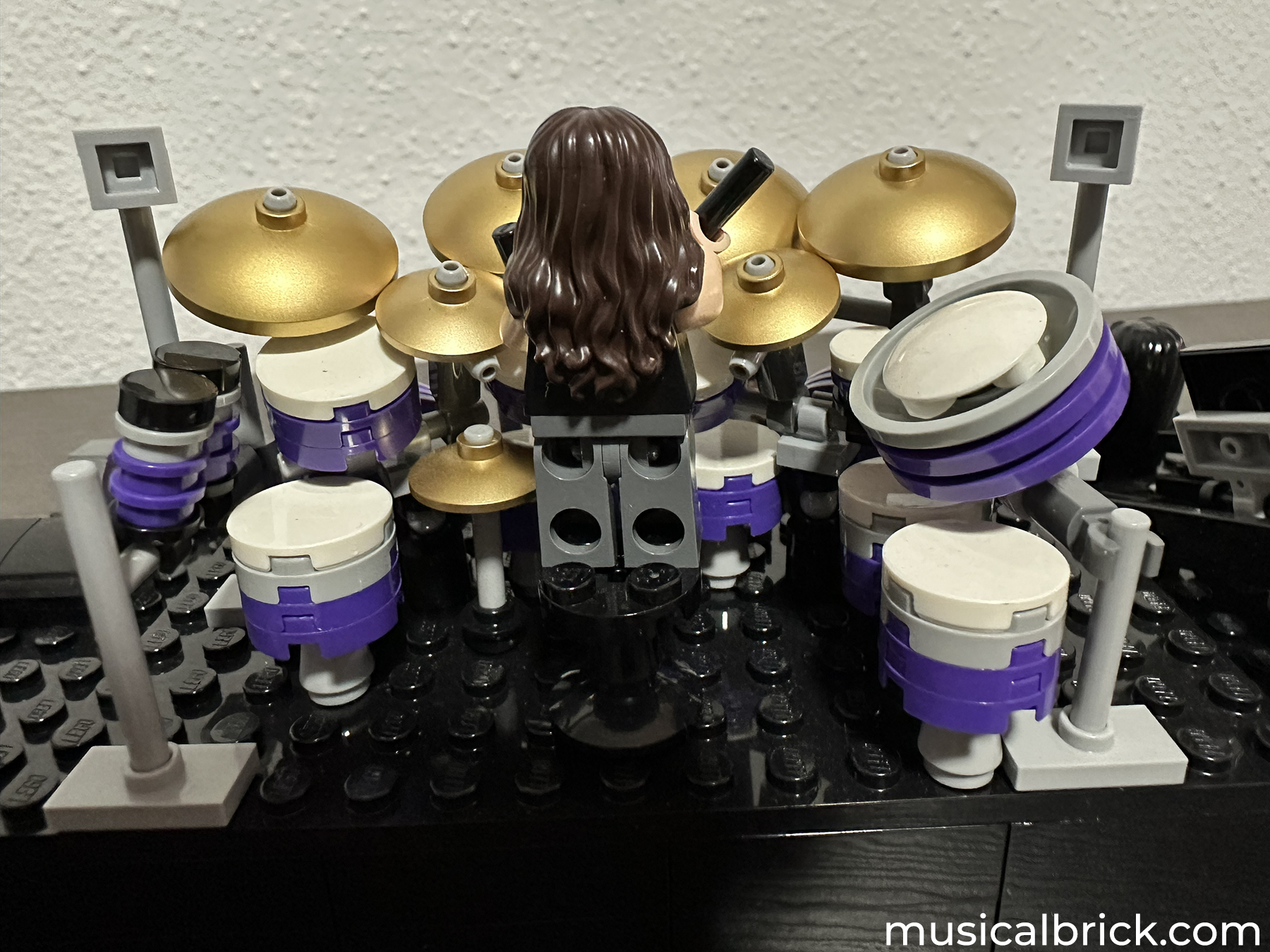
Recreating all 20 pieces at minifigure scale would have overwhelmed the LEGO stage, so I concentrated on its visual signature: the three purple bass drums, the gold cymbals, the dense framework and Portnoy sitting high above the rest of the band.
Even reduced to a handful of LEGO elements, it still looks like a machine built around a drummer.
Jordan Rudess and the Moving Keyboard
On the other side of the stage is another instrument that refuses to remain still.
Jordan Rudess has long used a custom keyboard stand that allows his main keyboard to rotate and tilt. Instead of standing behind a static bank of equipment, he can turn towards different parts of the audience, angle the keyboard dramatically and move around it while performing.
At the centre of the rig is a Korg Kronos workstation. The keyboard can be divided into different zones, allowing Rudess to play several sounds from different sections of the same instrument. Sounds and setups can be placed in performance order and advanced as the concert progresses.
The technology allows one keyboard to represent a much larger collection of instruments.
For the anniversary tour, Rudess added a display wrapping around the front of the keyboard. He described it as a way of elevating the visual experience, with the enclosure created by OK Design. It effectively turns the keyboard itself into part of the tour’s video production.
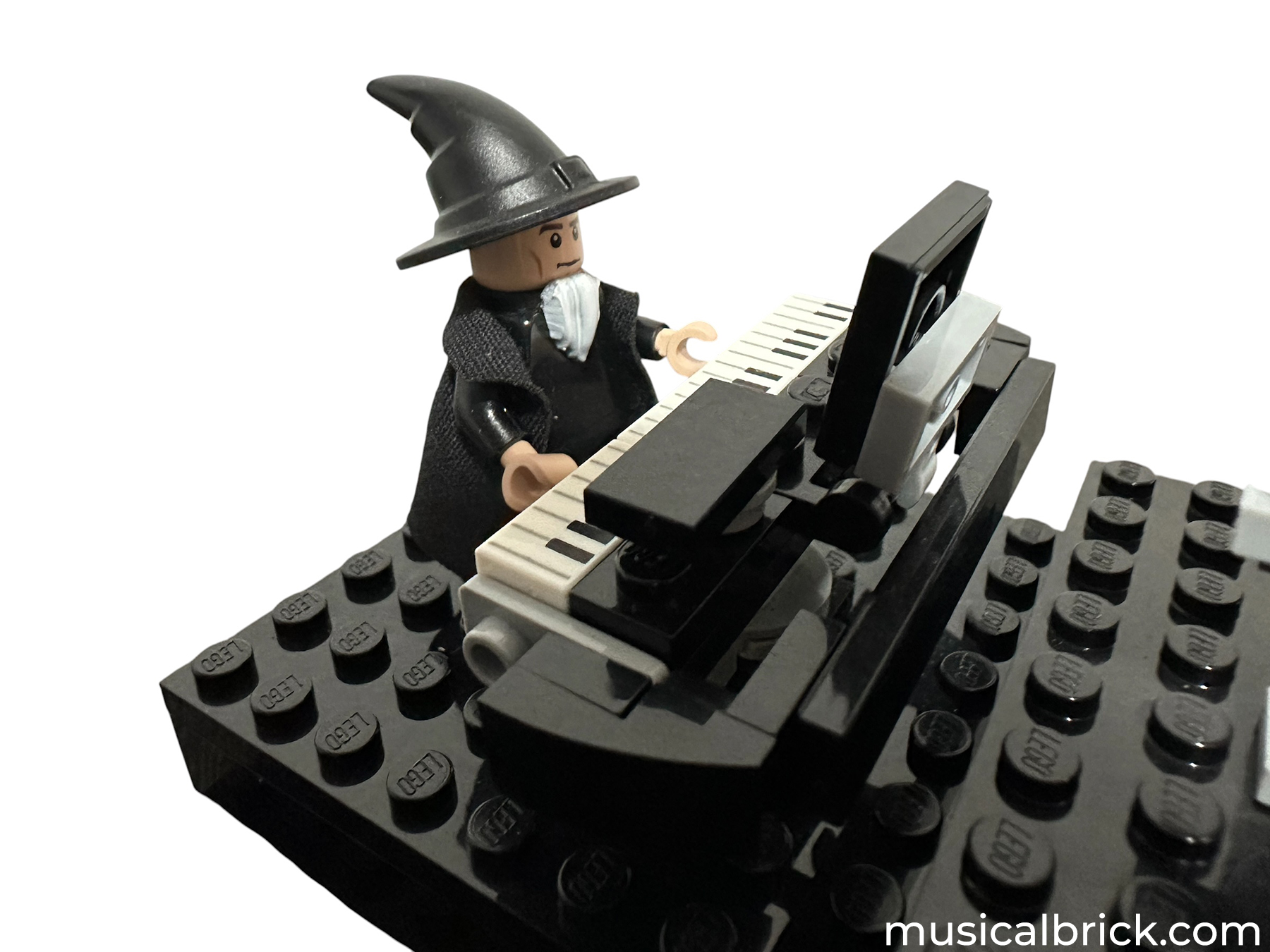
My LEGO version includes the layered keyboards, surrounding screens and articulated stand. The black and grey construction is small, but it captures the idea of Rudess operating a futuristic musical control station. The wizard hat provides the final, slightly less technological clue to his identity.
Turning Technology into Character
The stage also includes John Petrucci with his guitar, John Myung with his bass and James LaBrie at the front between the monitors and microphone stands. Between them, Portnoy and Rudess give the stage most of its structure, because their equipment does something the others’ does not: it changes shape as they perform.


The Dream Monster is not a backdrop. It is a system Portnoy has to navigate, physically moving between its two configurations mid-set. Rudess’s rig does the opposite job with the same underlying idea: one keyboard, reconfigured on the fly, standing in for an entire bank of instruments.
That is what makes Dream Theater well suited to LEGO in particular. The instruments themselves are modular, reconfigurable and built from repeating parts, which is exactly how a LEGO model is built.
The finished model does not reproduce every screen, light or cable from the full arena production. It reduces the stage to the details that make this particular version of Dream Theater recognisable.
Five musicians. Forty years of music. Three bass drums. And one very small stage.


Leave a Reply