

Valentin’s LEGO recreation of Pink Floyd’s iconic Division Bell stage is a stunning achievement at a massive in scale, incredibly detailed, and a masterclass in building technique that perfectly captures the spirit of one of rock history’s most ambitious touring productions.
Valentin grew up with LEGO, Pink Floyd, and Genesis. During the 1980s and 1990s, he witnessed the remarkable collaboration between artists like Floyd, Genesis, the Rolling Stones, and later U2, alongside architect Mark Fisher and builder Stageco, which led to visual, lighting, and structural revolutions in stage design. Mark Fisher, who founded what would become Stufish Entertainment Architects, pioneered portable architecture for rock concerts, designing twelve of the most complex stadium rock shows ever toured. Stageco, the Belgian staging company founded by Hedwig De Meyer, became the worldwide pioneer in designing and building custom-made and standardized concert stages. The legacy of the collaboration between Genesis and Vari-Lite also changed the way lighting was conceived on stage.
The Division Bell Stage
Pink Floyd’s 1994 Division Bell tour represented the pinnacle of this era’s stage design innovation. The stage was designed by lighting designer Marc Brickman and architecturally realized by Mark Fisher, creating what was at the time the largest touring production ever. Three identical stage sets were built by Brilliant Stages and Stageco, each measuring 197 feet (60 meters) wide by 72 feet (22 meters) deep by 77 feet (23.5 meters) high. The design featured a striking 130-foot (40-meter) arch inspired by the Hollywood Bowl, creating a distinctive semi-circular half-shell appearance.
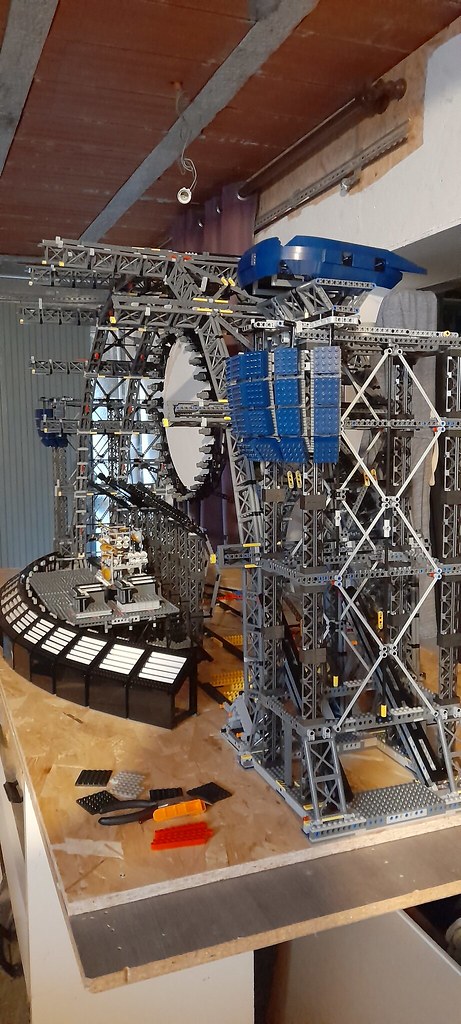
Each massive structure incorporated 700 tons of steel and required 33 trucks for transport. The sheer scale demanded three days to build, eighteen hours to set up, seven hours to break down, and two days to fully dismantle for load-out. This logistical challenge necessitated a strict “leapfrogging” system where the three stages rotated between venues across North America and Europe. The tour employed a crew of 161 people (though some sources cite 200) and required an initial investment of $4 million plus $25 million in running costs. The production even featured custom-designed 197-foot airships and a revolutionary quadraphonic sound system using Turbosound Flashlight delivering 232,000 watts of power.
Valentin’s LEGO Vision
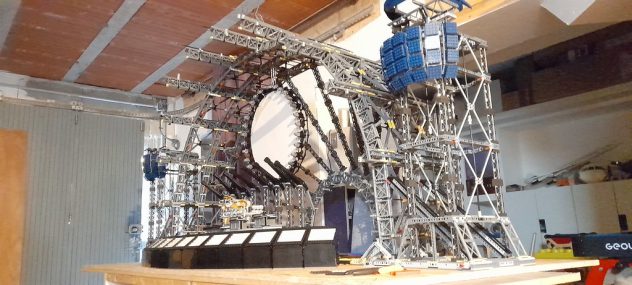
For Valentin, the LEGO design choices became rapidly obvious: this concept of fully customized stages composed of standardized components (with the constraint of rapid assembly and disassembly) had to be transposed into the LEGO world. The architectural philosophy that Fisher and Stageco brought to touring stages, where massive structures could be broken down and rebuilt repeatedly, perfectly mirrored the modular nature of LEGO construction.
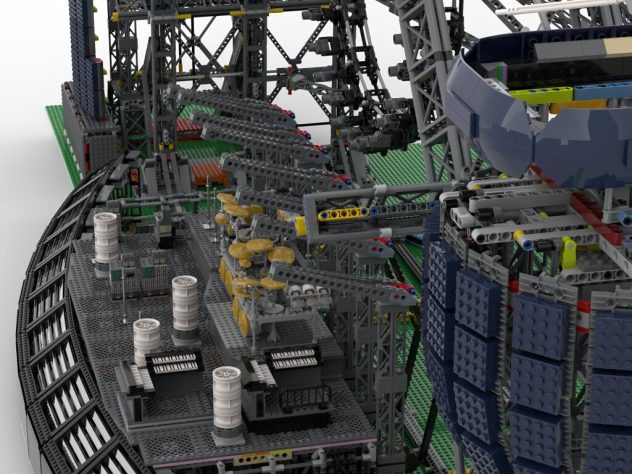
For many years, the obstacle was the size and availability of parts in his tiny workshop. Later, LDraw, LDD, and then Studio allowed him to start building these projects and, above all, to tackle huge technical challenges in LEGO. The models found on his Flickr represent the first achievements in solving these problems while celebrating the fascinating world of stage design.
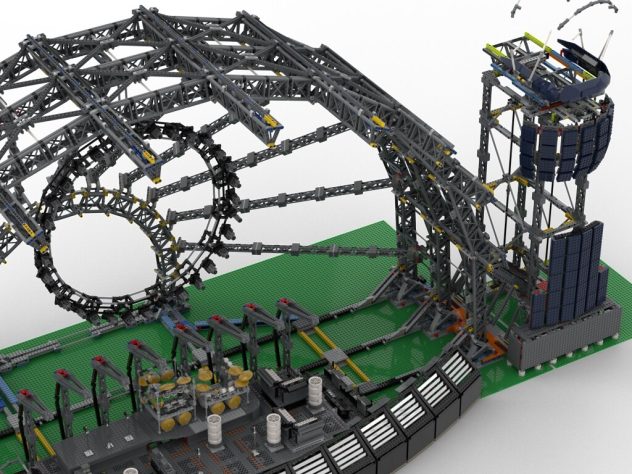
Valentin’s recreation is both massive and remarkably detailed, capturing the essence of Fisher’s original design while pushing the boundaries of what’s possible with LEGO. What strikes me most is the genius of his building techniques. The way he’s mixed Technic LEGO parts with traditional bricks demonstrates a sophisticated understanding of both structural engineering and aesthetic design. This hybrid approach allows the model to achieve the necessary strength to support its impressive scale while maintaining the visual accuracy needed to honor the iconic stage design. It’s this thoughtful integration of different LEGO systems that elevates the build from mere recreation to genuine architectural achievement.
Do you want a go and building this yourself? Check out Valentin’s Rebricable page for the instructions!
Future Projects
Other ideas have been in the pipeline for a long time at various stages of completion: the Rolling Stones Steel Wheels tour (another Mark Fisher and Stageco collaboration from 1989), the Genesis ’92 tour with sliding screens and cable ramp of Telescans, Beyoncé’s monolith designed by Es Devlin, and the holy grail: the Claw from U2’s 360° tour. However, these remain far from completion.
Check out Valentin’s website for updates.
Also follow his Instagram here


Leave a Reply